
 Fast & Efficient Delivery, learn more
 Expert Advice, we’re here to help
 All Major Cards Accepted
COSHH Cabinet Regulations Guide (UK 2026)
Last updated January 2026 to reflect UK COSHH regulations and Health and Safety Executive guidance available at that time.
Introduction: COSHH Cabinet Regulations Explained (2026)
COSHH cabinets play an important role in how UK workplaces store hazardous substances safely. Whether you manage a warehouse, workshop, laboratory, or office environment, understanding how COSHH regulations apply to storage is essential for compliance and risk management.
This guide explains how COSHH regulations relate to the storage of hazardous substances, including the use of COSHH cabinets, in the UK in 2026. It is intended for employers, health and safety managers, facilities teams, and anyone responsible for storing hazardous substances at work.
In this guide, we cover:
- What COSHH regulations are and how they apply to storage
- When COSHH cabinets are commonly required
- What substances are typically stored in COSHH cabinets
- Cabinet types, placement, and storage best practice
- Inspection, documentation, and enforcement considerations
While the COSHH Regulations themselves have not fundamentally changed for 2026, enforcement expectations and workplace standards continue to evolve. This guide reflects current guidance and accepted best practice.
What Are the COSHH Regulations?
COSHH stands for Control of Substances Hazardous to Health. The COSHH Regulations provide the legal framework for managing risks associated with hazardous substances in the workplace.
Under COSHH, employers are required to:
- Identify hazardous substances present at work
- Assess the risks those substances pose to health
- Prevent exposure where possible, or adequately control it
- Maintain control measures in effective working order
- Provide appropriate information, instruction, and training
- Monitor and review control measures regularly
COSHH applies to a wide range of substances, including chemicals, fumes, vapours, dusts, and biological agents.
It is important to note that COSHH does not prescribe specific storage products or cabinet designs. Instead, it sets outcome-based requirements. Employers must demonstrate that hazardous substances are stored safely and that risks to health are adequately controlled.
Guidance on meeting these obligations is provided by the Health and Safety Executive (HSE).
Are COSHH Cabinets a Legal Requirement?
COSHH regulations do not explicitly state that a “COSHH cabinet” must be used in every situation. However, employers are legally required to store hazardous substances in a way that prevents harm to health.
In many workplaces, COSHH cabinets are one of the most effective and practical ways to demonstrate safe storage and risk control.
COSHH cabinets are commonly required where risk assessments identify:
- The presence of hazardous substances
- A risk of exposure, leakage, or spillage
- A fire or ignition risk
- The need to restrict unauthorised access
Where a COSHH risk assessment identifies unsafe storage as a hazard, suitable containment becomes necessary. In many cases, this is achieved using appropriate COSHH storage cabinets.
When Is a COSHH Cabinet Commonly Required?
Whether a COSHH cabinet is needed depends on risk, not on industry type alone.
COSHH cabinets are commonly used in situations such as:
- Storage of flammable liquids
- Storage of toxic or corrosive substances
- Areas where chemicals could leak or spill
- Workplaces with shared or public access
- Environments where ignition sources are present
Factors influencing the need for a COSHH cabinet include:
- Quantity of hazardous substances stored
- Substance classification and hazard level
- Frequency of use
- Proximity to people, heat, or ignition sources
- Recommendations within safety data sheets (SDS)
COSHH cabinets are frequently found in workshops, warehouses, manufacturing sites, laboratories, and commercial cleaning stores. Temporary storage may also require COSHH cabinets if the risk profile remains high.
What Must Be Stored in a COSHH Cabinet?
COSHH cabinets are designed to support the safe storage of hazardous substances that present a risk to health or safety if improperly contained.
Substances commonly stored in COSHH cabinets include, but are not limited to:
- Flammable liquids such as solvents, fuels, and thinners
- Toxic chemicals
- Corrosive substances such as acids and alkalis
- Oxidising agents
- Certain commercial and industrial cleaning chemicals
Typical workplace examples include paints, varnishes, degreasers, oils, fuels, and laboratory reagents.
Not all substances automatically require COSHH cabinet storage. Low-risk products or substances stored in minimal quantities may not require specialist cabinets, provided a COSHH risk assessment confirms that alternative storage methods adequately control risk.
Safety data sheets and COSHH risk assessments should always be used to determine appropriate storage arrangements.
COSHH Cabinet Types and Specifications
COSHH cabinets are available in different types, each designed to manage specific risks identified during risk assessment.
Common COSHH cabinet types include:
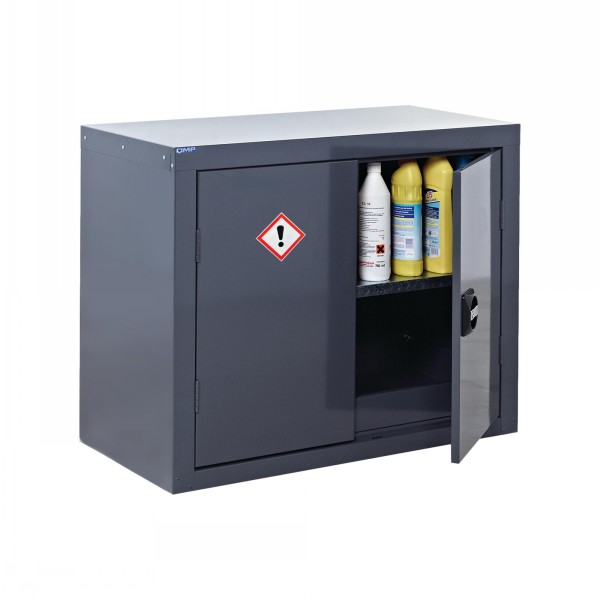
- Yellow COSHH cabinets for general hazardous substances
- Flammable storage cabinets designed to reduce fire risk
- Acid and alkali cabinets for corrosive chemicals
- Lithium battery storage cabinets, often used where fire and thermal runaway risks exist, even where COSHH may not strictly apply
Common safety features may include:
- Robust construction, often using steel
- Spill containment such as an integral sump
- Secure locking mechanisms
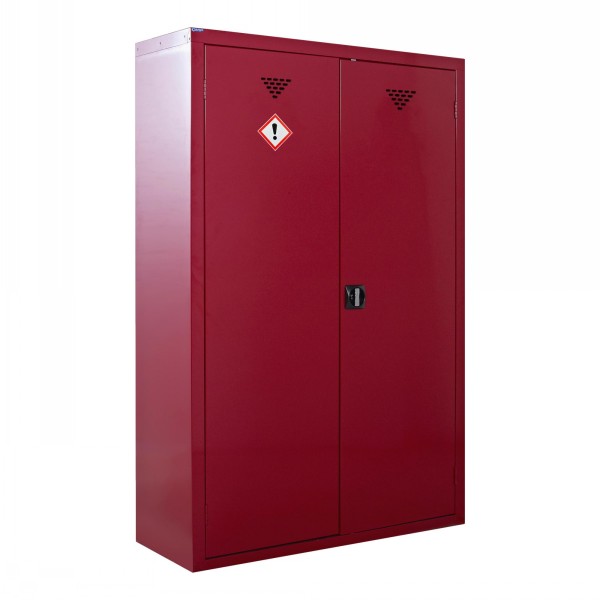
- Optional ventilation features
- Clear labelling or colour coding
Where flammable substances are stored, cabinets are commonly designed to meet recognised fire-resistance standards appropriate to their intended use. Segregation of incompatible substances remains essential.
COSHH Cabinet Placement and Storage Best Practice
The following reflect commonly accepted best practice rather than prescriptive legal rules.
Best practice includes:
- Locating cabinets away from ignition sources
- Ensuring cabinets do not obstruct escape routes
- Installing cabinets in suitable, well-ventilated locations
- Restricting access to authorised personnel
COSHH cabinets should not be overfilled, used for general storage, or modified in ways that compromise their integrity. Clear signage and labelling should be used to identify hazards and contents.
Inspections, Maintenance, and Documentation
COSHH cabinets must be maintained in effective working order to remain an appropriate control measure.
Inspection considerations include:
- Structural condition of the cabinet
- Integrity of doors, seals, and locks
- Condition of spill containment features
- Effectiveness of ventilation where fitted
Inspection frequency should be proportionate to risk and usage.
Documentation commonly maintained includes:
- COSHH risk assessments
- Inspection and maintenance records
- Safety data sheets
- Staff training records
Maintaining clear records demonstrates due diligence and supports compliance during inspections.
Enforcement and Non-Compliance Risks
The HSE enforces COSHH compliance through inspections and investigations.
Inspectors may review:
- COSHH risk assessments
- Hazardous substance storage arrangements
- Condition and suitability of storage equipment
- Training and documentation
Failure to comply with COSHH requirements can result in improvement notices, prohibition notices, financial penalties, or prosecution in serious cases. Enforcement focuses on prevention and effective risk management.
Common COSHH Storage Mistakes to Avoid
Common issues identified in workplaces include:
- Using standard cupboards instead of appropriate COSHH cabinets
- Mixing incompatible substances
- Overloading cabinets beyond capacity
- Poor labelling or missing signage
- Lack of staff training
- Treating COSHH storage as a one-off task rather than an ongoing responsibility
Avoiding these mistakes significantly reduces compliance and safety risks.
Frequently Asked Questions
What are the essential features of a COSHH storage cabinet?
COSHH storage cabinets are designed to support the safe storage of hazardous substances where risk assessments identify a need for controlled containment. Common features typically include robust construction, often using steel, to withstand workplace use and reduce the risk of damage. Many cabinets incorporate spill containment measures such as an integral sump to help manage leaks or spills.
Depending on the substances being stored, cabinets may also include ventilation options, secure locking mechanisms to restrict access, and clear colour coding or labelling to aid identification. Where flammable substances are involved, cabinets are commonly designed to meet recognised fire-resistance standards appropriate to their intended use.
The specific features required will depend on the substances stored and the findings of the COSHH risk assessment.
Do small businesses need COSHH cabinets?
Yes, if hazardous substances are present and risk assessments indicate that controlled storage is required.
Are cleaning products covered by COSHH?
Commercial and industrial cleaning chemicals are often covered by COSHH and may require controlled storage depending on risk.
How often should COSHH cabinets be inspected?
There is no fixed inspection interval. Inspections should be regular and proportionate to risk and usage.
Are COSHH cabinets required in offices?
COSHH cabinets may be required in office environments if hazardous substances are stored and risk assessments identify a need.
Summary: COSHH Cabinet Responsibilities in 2026
COSHH regulations continue to provide the legal framework for managing hazardous substances in UK workplaces. While COSHH cabinets are not explicitly mandated by name, they are commonly used where risk assessments identify the need for controlled storage.
In 2026, employers remain responsible for carrying out suitable COSHH risk assessments, storing hazardous substances safely, maintaining storage equipment, keeping accurate records, and reviewing arrangements regularly.
Appropriate COSHH cabinet use supports compliance, protects staff, and reduces workplace risk.